


As Thailand’s digital landscape continues to evolve, businesses need to stay ahead of the latest trends to optimize their online presence. The Digital 2025: Thailand report reveals how consumers access information, research brands, and book travel services online. Here’s a breakdown of the most important takeaways and what they mean for businesses in hospitality, tourism, and digital marketing.
1. The Growth of Online Travel & Tourism Bookings
Thailand’s online travel and tourism sector saw significant year-on-year growth in 2024, highlighting the increasing reliance on digital platforms for booking services:
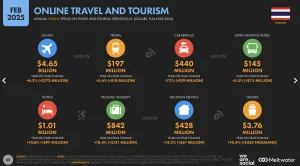
- Flights: $4.65 billion (+6.3%)
- Hotels: $1.01 billion (+10.6%)
- Vacation Rentals: $428 million (+15.2%)
- Package Holidays: $842 million (+18.4%)
- What This Means for Businesses
For hotels, travel agencies, and tourism businesses, SEO, Google Ads, and social media marketing are essential in capturing this growing digital demand. A strong online presence, optimized booking systems, and seamless mobile experiences can drive direct bookings.
2. How Thai Consumers Access Online Information
Consumers in Thailand are highly digital-savvy, using multiple platforms to search for information before making a decision. The most common online behaviors include:
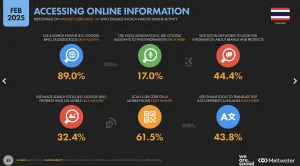
- Search engines dominate: 89% use Google, Bing, or DuckDuckGo monthly
- QR codes are widely used: 61.5% scan QR codes each month
- Social media as a research tool: 44.4% use platforms to research brands
- Online translation tools are commonly used: 43.8% translate content weekly
Marketing Takeaway
To maximize reach, businesses must optimize for search engines, ensure QR code integration in marketing materials, and leverage social media ads. Providing multilingual content can enhance accessibility for diverse audiences.
3. The Top Channels for Brand Research
When Thai consumers research brands, they rely on multiple online sources. The most-used platforms for brand research include:
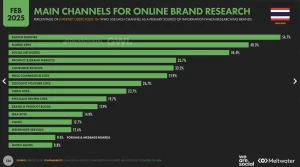
- Search engines: 54.7%
- Mobile apps: 48.3%
- Social networks: 44.4%
- Consumer reviews and price comparison sites: 31.9%
Business Strategy
This data underscores the need for strong SEO, mobile app presence, and an active social media strategy. Additionally, positive customer reviews and price transparency play a crucial role in influencing purchase decisions.
4. Where Thai Consumers Discover New Brands
The top sources of brand discovery in Thailand include:
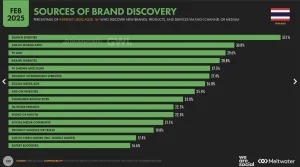
- Search engines: 37.1%
- Mobile app ads: 30.8%
- TV and social media ads: 29.6%
- Brand websites and review sites: 28.8%
Actionable Insights for Marketers
To increase brand visibility, businesses should invest in a multi-channel approach—leveraging Google Ads, social media ads, and influencer collaborations while optimizing websites for organic search.
5. Thailand’s Most-Visited Websites in 2024
According to SEMRush and SimilarWeb rankings, the top websites based on traffic in Thailand include:
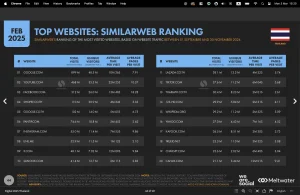
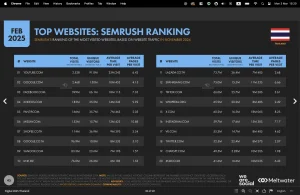
- YouTube – 2.5B visits
- Google – 2.4B visits
- Facebook – 399M visits
- Shopee – 114M visits
- TikTok – 66M visits
- Instagram – 59.7M visits
It’s important to note that while some adult content websites appear in traffic rankings, sharing or publishing pornographic content in Thailand is illegal under the country’s strict cyber laws.
Key Digital Marketing Strategy
Video content plays a major role in digital engagement, with YouTube, Facebook, and TikTok ranking among the top platforms. Businesses should prioritize video marketing, influencer partnerships, and social media advertising to reach audiences effectively.
6. Web Traffic by Device & Browser Preferences
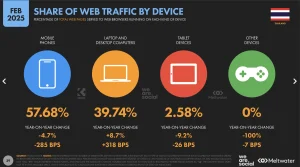
Thailand remains a mobile-first market, with 57.68% of web traffic coming from mobile devices, although desktop usage is growing at 39.74%.
Most-used browsers: Chrome (69.54%), Safari (18.53%), Edge (4.12%)
How Businesses Should Adapt
Websites must be mobile-optimized with fast loading speeds, responsive design, and seamless mobile booking experiences to capture mobile users.
Final Thoughts: How Businesses Can Stay Competitive
The Digital 2025 report highlights that consumer behavior is shifting towards mobile, social media, and search-driven brand discovery. To stay competitive, businesses in the hospitality and tourism industry should:
- Invest in SEO and Google Ads to capture high-intent searches
- Leverage social media and influencer marketing to engage audiences through content
- Prioritize mobile-friendly experiences to ensure seamless bookings
- Use video marketing to enhance engagement on YouTube, TikTok, and Instagram
- Monitor online reviews and enhance brand trust through reputation management
As Thailand’s digital ecosystem continues to grow, businesses that adapt to these trends will be best positioned for success in 2025 and beyond.