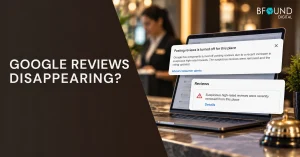



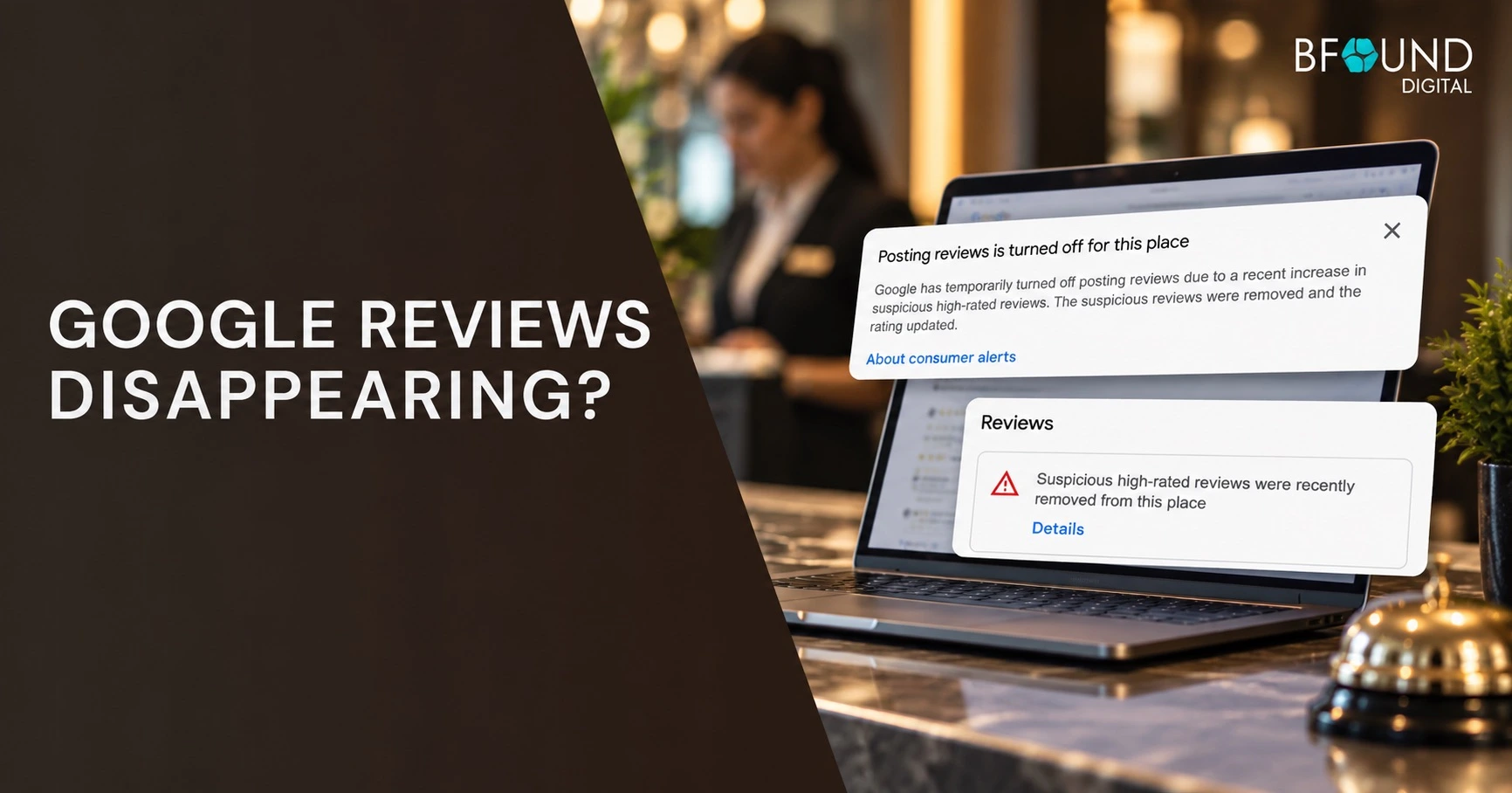
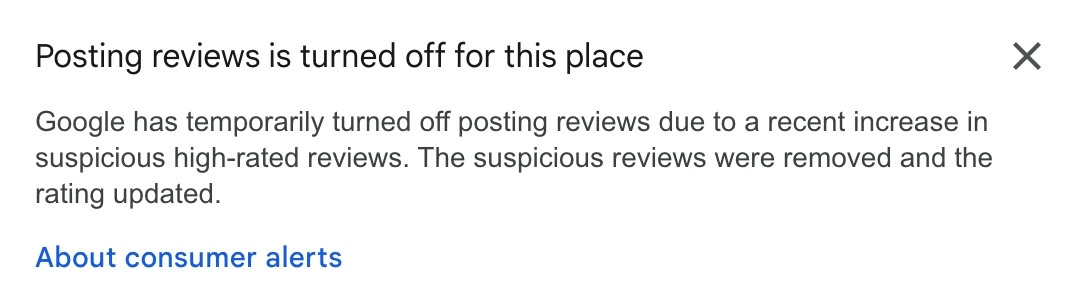
If your Google reviews are disappearing, you are not alone. Across 2025 and into 2026, hotels, restaurants, and local businesses worldwide have reported reviews vanishing overnight, ratings dropping without warning, and a new message appearing on their Google Business Profile: “Posting reviews is turned off for this place.”
This is not a rumor or a one-off glitch. Google has confirmed it is running stricter spam detection across Google Maps, and the crackdown is hitting real, legitimate businesses along with the fake ones it was built to catch.
What’s Actually Happening to Google Reviews Right Now
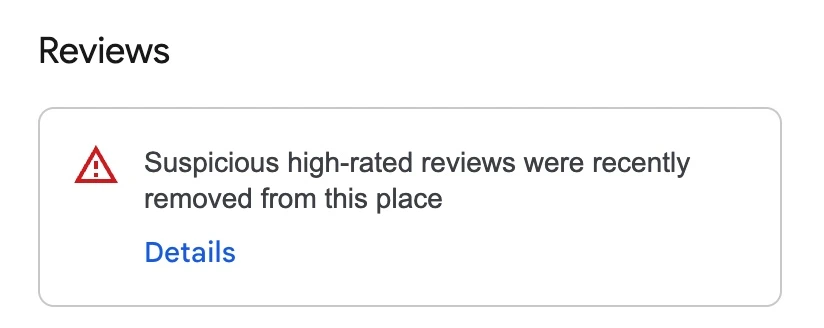
Google has been expanding a feature that temporarily disables new review submissions on a business profile once its systems flag “a recent increase in suspicious high-rated reviews.” The feature first appeared in late 2023 in limited markets and has since rolled out fully across the US and other regions, including Thailand.
When it triggers, three things tend to happen together. Existing reviews Google judges suspicious get removed. The overall star rating recalculates based on what’s left. New reviews stop posting entirely until the block lifts.
In one documented case, a business lost 4,588 of 4,651 reviews within 24 hours. Google confirmed the incident, stated it was reviewing the cause, and promised to restore any reviews removed in error. No timeline was given.
Why Google Is Doing This
Google’s stated reason is fake and manipulated reviews. Bought reviews, employee reviews, and incentivized 5-star blasts genuinely distort local search results, so Google built automated systems, including AI models, to catch unnatural review patterns before they reach the public.
The problem is the detection isn’t perfect. It reacts to patterns, not intent, so a business running a completely honest review campaign can look identical to a manipulated one if the volume and source of reviews match a suspicious shape.
The Hospitality Pattern That Triggers a Block
For hotels, resorts, and restaurants, one specific combination shows up again and again in documented cases: reviews requested and submitted from inside the business itself.
A QR code taped to the checkout counter. A table tent asking guests to scan and review before they leave. Front-of-house staff handing over a tablet at the end of a meal. Each of these is common practice, and each one, on its own, is not the problem.
The risk appears when these tactics combine with a sudden spike in volume. Tracked cases show monthly review counts jumping 2 to 3 times above baseline for several months in a row, often with bursts of 10 or more reviews landing in a single day, right before a block hits.
Once a block is applied, it does not lift quickly. In every case tracked over a recent 60-day period, the block lasted the full 30 days regardless of whether the business appealed.
What to Do If Your Reviews Have Disappeared or Been Blocked
Start by checking your Google Business Profile directly for the “posting reviews is turned off” message rather than assuming it’s a display bug. That message confirms a spam-related block, not a technical glitch.
If you see it, submit an appeal through Google’s official support form and document your case: how reviews were actually collected, over what time period, and from which channels. Appeals don’t guarantee a faster resolution, but they help build the record Google needs to correct false positives.
While you wait, rethink how you ask for reviews going forward. Spread requests across email, SMS, or post-stay messages instead of concentrating them at a single in-venue touchpoint. Ask steadily over time rather than in bursts, and never trade a discount or freebie for a 5-star review.
If your ratings took a visible hit, don’t panic and don’t try to “buy back” the rating with a fast new batch of reviews. That is the exact pattern that gets flagged in the first place.
Reviews remain one of the strongest local SEO and trust signals a hospitality business has. Protecting how they’re collected protects your visibility on Google Maps and Search long after this current wave of enforcement passes. If you want help auditing your review strategy or recovering from a posting block, BFound Digital’s local SEO team can walk through your Google Business Profile and build a safer review collection plan.
Frequently Asked Questions
Why did my Google reviews suddenly disappear?
Google has been running stricter spam detection on Google Business Profiles since 2025, and it removes reviews it judges suspicious, sometimes in large batches. This can happen to legitimate businesses, not just ones using fake reviews. Check your profile for a message about suspicious review activity, and if you see one, it confirms a spam-related removal rather than a random bug.
What does “posting reviews is turned off for this place” mean?
This message means Google has temporarily blocked your business profile from accepting new reviews after detecting a spike in suspicious high-rated reviews. It usually appears alongside the removal of recent reviews Google flagged as unnatural. The block is Google’s response to a pattern, not a permanent penalty, though it can last several weeks.
How long does a Google review posting block last?
Based on tracked cases, review posting blocks typically last the full 30 days, regardless of whether the business submits an appeal. Google has not published an official timeline, and resolution speed can vary by case. Businesses should plan around a month-long gap in new reviews rather than expecting a quick fix.
Can I get my deleted Google reviews back?
Yes, but only if Google agrees the removal was a mistake. Submit an appeal through Google’s official support form with details of how the reviews were collected, and Google has publicly committed to restoring reviews removed in error. There is no guaranteed timeline, and not every appeal results in reviews being reinstated.
Do QR codes for reviews get businesses blocked on Google?
A QR code alone is not the problem. The risk comes from combining QR codes at a single checkout or table with a sudden, sustained spike in review volume, especially when reviews are submitted from inside the business location itself. Spacing out review requests across different channels and times lowers that risk significantly.
Is it safe to ask hotel or restaurant guests for Google reviews in 2026?
Yes, asking guests for honest reviews is still safe and effective for local SEO. The key is pacing: request reviews steadily after checkout or dining rather than in concentrated bursts, and avoid offering discounts or incentives in exchange for a review, since incentivized reviews are one of the clearest patterns Google’s spam systems target.
Will a review posting block hurt my Google Maps ranking?
A block itself does not directly change your ranking algorithmically, but the removed reviews and lower visible rating can reduce click-through and booking conversions, and a stalled review count slows the ongoing trust signals Google factors into local search and AI-driven discovery. Recovering review velocity after a block matters for long-term visibility.