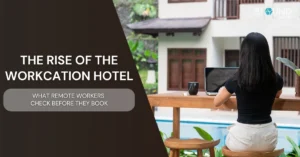



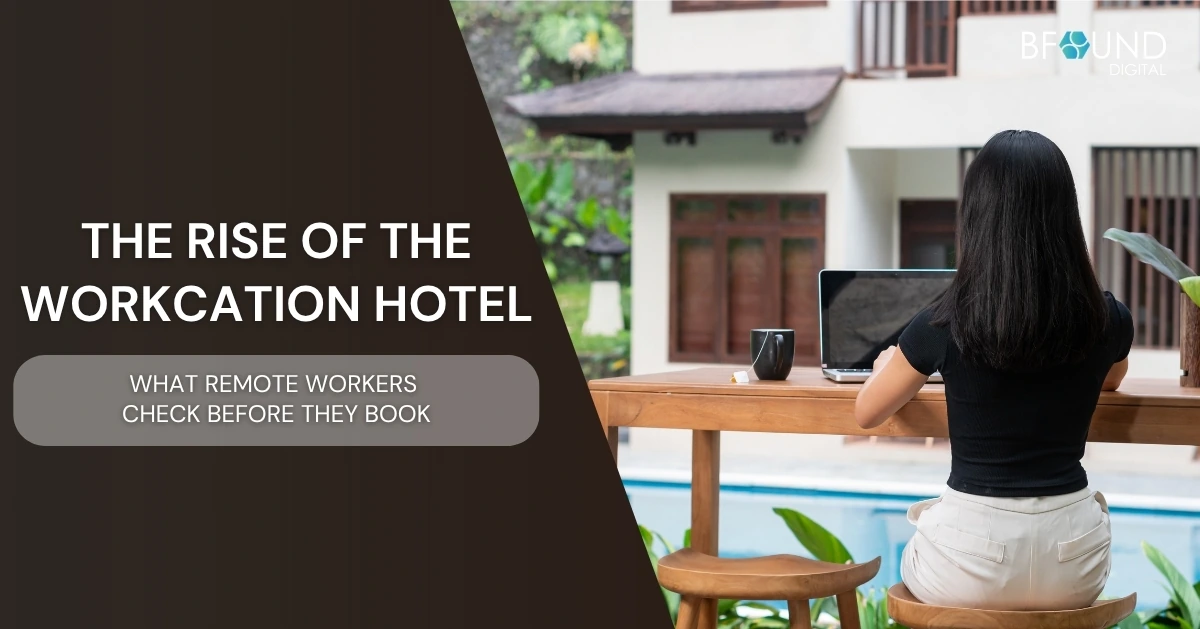
Remote work stopped being a pandemic arrangement years ago. It is now a standing travel segment, and it books differently from every other segment in your system.
If you are wondering how to attract remote workers to your hotel, the honest answer is that it has less to do with buying new furniture than with three things: who can legally stay long in Thailand, what you publish about your rooms, and how you price a month instead of a night.
What a Workcation Actually Is
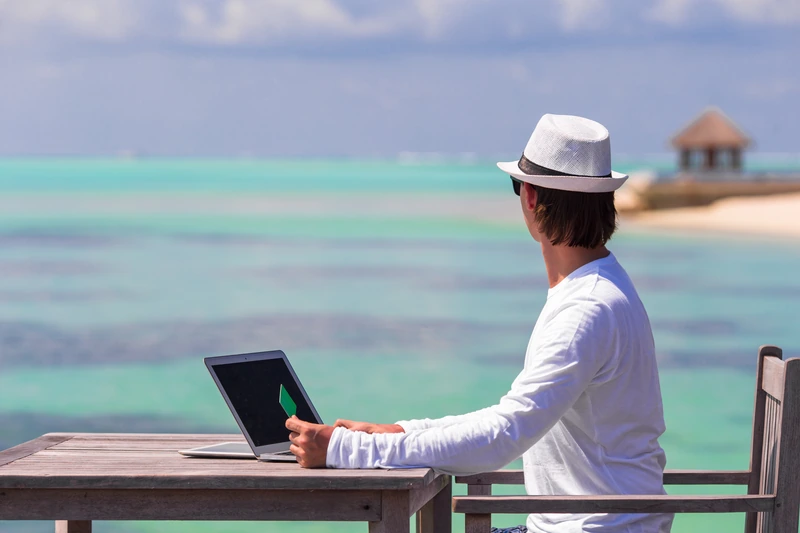
A workcation is a trip that combines remote work with leisure travel, allowing guests to continue their regular professional responsibilities while staying at a destination they might otherwise visit for a holiday. The term is also spelled workation, and less commonly, worcation.
It is not the same as a digital nomad stay, and the difference matters when you price. A workcation guest keeps a home and a workplace to go back to, so the trip has an end date. A digital nomad works without a fixed base, so the stay is open-ended.
Most properties will see both, and the two want different things from the same room.
The guest works on weekdays and travels in the evenings and at weekends. That single detail changes your demand pattern, because workcation nights land midweek and in shoulder season, where most independent hotels already have space.
It also changes what the guest is judging. A leisure guest looks at the bed and the view. A workcation guest looks at the bed, the view, and whether the room is somewhere you could take a video call from.
Thailand’s Visa Rules Just Made This Segment Bigger
This is the part most international articles on the topic miss, and it matters more in Thailand than almost anywhere else.
Thailand launched the Destination Thailand Visa (DTV) by Royal Gazette announcement in July 2024, with the stated aim of getting tourists and remote workers to stay longer and spend more. It is a five-year, multiple-entry visa allowing 180 days per stay, for remote workers and freelancers earning from abroad. Each entry can be extended once by another 180 days.
Both words are in the paperwork. The Royal Thai Embassy in London lists the first of the visa’s three categories, DTV1, as workcation, while the specialist press calls the same visa Thailand’s digital nomad visa. A 180-day stay is a long workcation and an ordinary month for a nomad, so expect enquiries from both.
At the same time, short stays got shorter. The 60-day visa exemption ended on 15 September 2026 and was replaced with 30 days for 60 countries and territories, and 15 days for two more. Travellers using those exemptions at a land border are generally limited to two such entries a calendar year.
Read those two together and the direction is clear. The casual long-stay tourist who used to chain tourist entries has a narrower window, while the properly documented remote worker has a five-year runway.
There is a caveat worth knowing before you build a forecast on it. Thailand does not publish statistics breaking down DTV applications or approvals, so there is no clean national picture of how many holders are actually here. The most quoted figure comes from trade press: over 35,000 applicants had filed for the visa by July 2025, according to IMI Daily.
Treat it as a growing segment with no official size, not a guaranteed demand curve.
What Remote Workers Actually Check Before Booking

Industry guidance for hoteliers is consistent on the order of priorities, and the list is shorter than most hotels expect.
Reliable, high-speed Wi-Fi is non-negotiable, followed by convenient food and drink: all-day dining, room service and coffee stations that keep guests fueled during work hours. A comfortable workspace with desk access and multiple outlets ranks alongside it.
Noise is the other recurring theme: many workers want somewhere quiet enough to take calls without disturbing others, and some need only day access to a desk with no overnight stay at all.
Notice what is not on that list. No one is asking for a rebuilt lobby. A set of work-ready rooms with a real desk, a task chair and outlets within reach of the desk will do more than a renovation.
Price the Month, Not the Night
This is where most independent properties lose the booking without realising it.
A remote worker deciding between your hotel and a serviced apartment is comparing a month of cost, not one night’s rate. If your weekly and monthly rates are not published anywhere, you are not in that comparison.
One commonly recommended approach is discounting stays over 30 days and adding perks that suit the pattern, such as flexible housekeeping so meetings are not interrupted.
Build the offer around length of stay rather than a nightly discount, and track the segment separately for at least a season. A longer stay at a lower nightly rate moves both your revenue and your operating cost, and you want to see which way before you scale it.
Make Sure You Are Findable
A work-friendly hotel that never says so online is invisible to this segment. Search engines and AI assistants cannot infer a workspace from a photo of a bedroom.
The fix is a dedicated page for long-stay and work-friendly rooms that names the Wi-Fi speed, the desk setup, and the weekly and monthly rates in plain words. The same details then need to match on your Google Business Profile and your OTA room descriptions, because inconsistency between them is what makes guests check a competitor instead.
From there it is the same discipline as the rest of your hotel SEO programme: a keyword cluster of its own, with its own page, rather than a sentence added to the rooms page. If you are already working on a direct booking architecture that converts, the long-stay page belongs inside it, not beside it.
None of this is expensive, which is the same point we made about marketing a hotel without a big budget. It needs the right rooms described accurately and priced for the way this guest books.
Want to know whether workcation demand is worth chasing at your property? Request a free digital audit and we will look at your current long-stay visibility with you.
Frequently Asked Questions
What is a workcation?
A workcation is a trip where someone keeps doing their normal job while staying somewhere they would otherwise visit on holiday. The term is also written as workation or worcation. It sits between a business trip and a leisure stay: the guest works on weekdays, then uses evenings and weekends like a traveller. For hotels, the practical difference is length of stay and timing. A workcation guest books nights a leisure guest would not, often midweek, and judges the room on whether it works as an office as much as on whether it is comfortable.
What is the difference between a workcation and a digital nomad stay?
A workcation has an end date and a digital nomad stay does not. A workcation guest keeps a home and a workplace to return to, so the trip is planned around a fixed return. A digital nomad works without a fixed base, so the stay is open-ended and gets weighed against renting rather than against other hotels. Both want reliable Wi-Fi and a usable desk, so the room itself serves either guest. The difference shows up in rate: one books nights, the other compares a month of cost.
How long can a remote worker legally stay in Thailand?
On the Destination Thailand Visa, a remote worker can stay up to 180 days per entry, extendable once by a further 180 days at an immigration office. The DTV is valid for five years with multiple entries, carries a 10,000 THB application fee, and asks for proof of 500,000 THB in funds plus income earned outside Thailand. Short stays got shorter in 2026: the 60-day visa exemption was replaced from 15 September 2026 with 30 days for most eligible nationalities. For hotels, that means long-stay guests increasingly hold a DTV.
What do remote workers look for in a hotel?
Reliable high-speed Wi-Fi comes first, followed by a proper desk and chair, power outlets within reach, and somewhere quiet enough to take video calls. Industry guidance for hoteliers consistently puts connectivity ahead of every other amenity. Beyond the room, remote workers look for all-day food and coffee, easy check-in and check-out, and flexible housekeeping so meetings are not interrupted. Published weekly and monthly rates matter too, because a guest comparing a hotel against a serviced apartment is comparing a month of cost, not one night.
Do hotels need a coworking space to attract remote workers?
No. A dedicated coworking floor helps, but most independent properties win this segment with smaller changes: upgrading Wi-Fi, putting a real desk and task chair in a set of rooms, and giving over a quiet corner of the lobby with power and low foot traffic. Hotels that cannot justify a build can start by designating a handful of work-ready rooms and describing them accurately online. The risk is promising a workspace that disappoints on arrival, because this segment compares properties on exactly those details.
Is a workcation package worth it for a small independent hotel?
It can be, if the package fills a real occupancy gap rather than discounting rooms that would sell anyway. Workcation demand tends to land midweek and in shoulder season, which is where most independent hotels have space. Build the offer around length of stay: a weekly or monthly rate with laundry, breakfast, and flexible housekeeping included is more persuasive than a nightly discount. Track the segment separately for at least one season, because a longer stay at a lower nightly rate changes both revenue and operating cost.
How do hotels get found when someone searches for a workcation hotel?
The property needs a page that says so plainly, because search engines and AI assistants cannot infer a workspace from photos of a bedroom. Create a dedicated long-stay or work-friendly page naming Wi-Fi speed, desk setup, and weekly or monthly rates, then make sure the same details appear on the Google Business Profile and in OTA room descriptions. Hotels working on their search visibility should treat this as a new keyword cluster of its own, not a line added to the rooms page.